

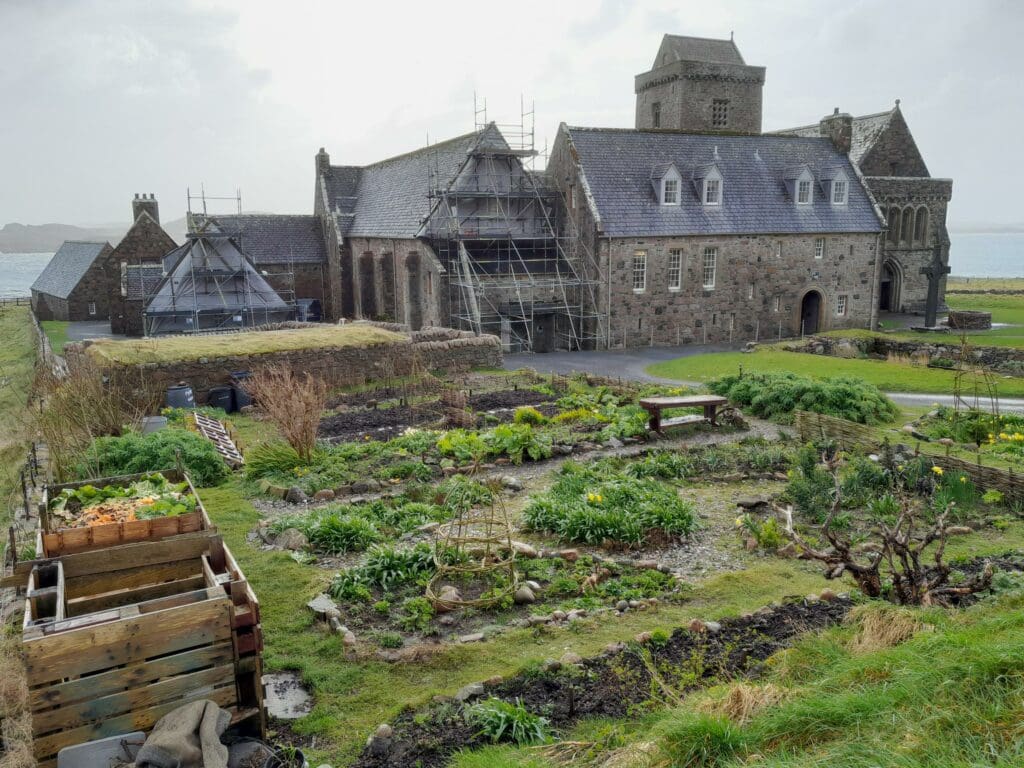
Joint Island centre’s gardener, Terry Over, shares his reflections on what it means to garden sustainably.
I remember the light bulb moment in 1998 so clearly – my eldest daughter was a few months old, and I was doing the laundry. As I poured the washing detergent into the machine, I noticed the toxic symbols on the bottle and the words “keep out of the reach of children”. So, if it is not great for our children why are we washing the clothes they are going to wear in it and then sending the rinsed water down the drain to the rivers and the sea?
I remembered being challenged by my ignorance; for decades we had simply washed our clothes without consciously thinking about the ethics of the process. I set aside an hour, and internet searched the harm that each individual ingredient caused to human health and the natural environment. I failed to find any research that understood the harm caused by the cocktail of all the ingredients together, let alone the toxins from the plastic bottle itself. It was definitely time well spent, a revelation even, and set me off on a journey of completely changing our habits with regards to the use of all synthetic chemicals in our home and garden, and a quest for more sustainable decision in all areas of my life.
In the garden I committed to grow our own fruit and vegetables, doing it organically, and as sustainably as possible. I slowly absorbed that gardening is a regenerative practice that nurtures life at multiple levels – environmental, physical, mental, economic, spiritual and social. It’s like cultivating a small ecosystem that benefits both the gardener and the planet.
So what does a sustainable garden look like? A sustainable garden is one that gives back rather than takes from its surroundings. In practice for me it includes inter alia:
- no synthetic fertilisers,
- no synthetic pesticides,
- rainwater or grey water use only,
- efficient home composting,
- organic mulches,
- homemade growing medias,
- “right plant, right place”,
- no bare soil,
- embracing the “weeds”,
- perennial fruit and vegetables,
- “no dig” practices,
- letting the lawn grow long,
- creating a wildlife pond and
- striving for enhanced biodiversity and natural integrated pest management
It wasn’t an instant fix, but a joyous discovery and learning over the years as I pursued my curiosity to better understand natures natural ways of nurturing thriving plants. Charles Dowding and Huw Richards shaped my online education, participation in community gardening & environmental projects fuelled the journey, and guidance from experienced horticulturalist & ecologist colleagues broadened that knowledge. Trial and error is a strong way to learn.
Choosing to garden sustainably is like tending a delicate ecosystem—one that balances human needs with the health of the planet, ensuring that the soil, water, plants, and wildlife thrive together now and for future generations. We are only one species among many. In the UK alone there are 25.8 million gardens, covering some 9,600km2 therefore us gardeners have the opportunity to make a considerable difference. Sustainable gardening matters deeply because it
- Protects and Enhances Ecosystems 🌿
Sustainable gardening nurtures biodiversity by providing habitats for beneficial insects, birds, and soil organisms. It avoids harmful chemicals that can disrupt these natural relationships, helping maintain a balanced, resilient garden ecosystem. - Conserves Natural Resources 💧
By using water-efficient practices like drip irrigation, rainwater harvesting, and drought-tolerant plants, sustainable gardening reduces water waste. It also promotes soil health through composting and mulching, reducing the need for synthetic fertilizers and preserving fertile soil for the long term. - Reduces Carbon Footprint 🌍
Sustainable gardens minimize reliance on fossil fuels by reducing synthetic chemical inputs, avoiding heavy machinery when possible, and encouraging local seed saving and plant propagation. Plants themselves absorb carbon dioxide, helping combat climate change. - Supports Healthy Food and Environment 🥕
Growing food without synthetic pesticides and fertilizers means fewer toxins in your produce and less pollution in the environment. This leads to healthier soil, cleaner water, and safer habitats for wildlife and people alike. - Encourages Resilience and Adaptability 🌾
Sustainable gardening embraces native and climate-adapted plants, which are naturally more resistant to pests, diseases, and extreme weather. This reduces the need for interventions and supports a garden that can thrive amid changing conditions. - Fosters a Sense of Stewardship and Connection 🌻
Gardening sustainably connects you to natural cycles and promotes mindful care of the earth. It encourages thoughtful decisions that honour the dignity of all living beings and the integrity of the environment.
In short, sustainable gardening is a way to cultivate abundance without depletion – a practice that mirrors the wisdom of natural ecosystems, where every element supports the whole. It’s a hopeful, regenerative approach that helps gardens—and gardeners—flourish in harmony with the planet. Plus, it is more fun being innovative in the garden, and oh my, the taste of homegrown food is simply a joy, and fuels a reason to re-connect again and again with our awesome planet.
Terr Over – joint Island Centres Gardener
 USA North East